Healthy Vision, Bright Futures
Pediatric Eye Care
Children's vision problems can hinder learning and development if untreated. We offer warm, friendly, specialized pediatric eye exams and squint management.
The Healthy Eye Clinic
Children's vision problems can hinder learning and development if untreated. We offer warm, friendly, specialized pediatric eye exams and squint management.
Children are not just miniature adults. They require a completely different clinical approach, vocabulary, and testing environment. At The Healthy Eye Clinic, we aim to make eye exams a positive, stress-free experience. Children who are comfortable and engaged provide much more accurate testing results.
Because children's visual pathways continue developing until about age 8, identifying problems early is crucial. Leaving refractive errors, squint, or lazy eye untreated during these critical development years can lead to permanent, irreversible vision deficits in adulthood.
Early intervention can permanently correct conditions that would otherwise cause lifetime vision impairment.
Strengthening Visual Pathways
When one eye is weaker than the other, the brain ignores its signals and favors the stronger eye. If untreated, the weaker eye's visual pathway fails to develop. We treat amblyopia using custom corrective glasses and patching therapy.
Restoring Alignment & Depth
Strabismus occurs when the eyes are misaligned and look in different directions (inward, outward, upward, or downward). We offer specialized binocular vision training, prismatic glasses, and surgical muscle alignment.
Myopia, Farsightedness & Astigmatism
Children often do not complain about blurry vision because they assume everyone sees the way they do. Refractive issues can manifest as sitting too close to the TV, squinting, frequent eye rubbing, or school difficulties.
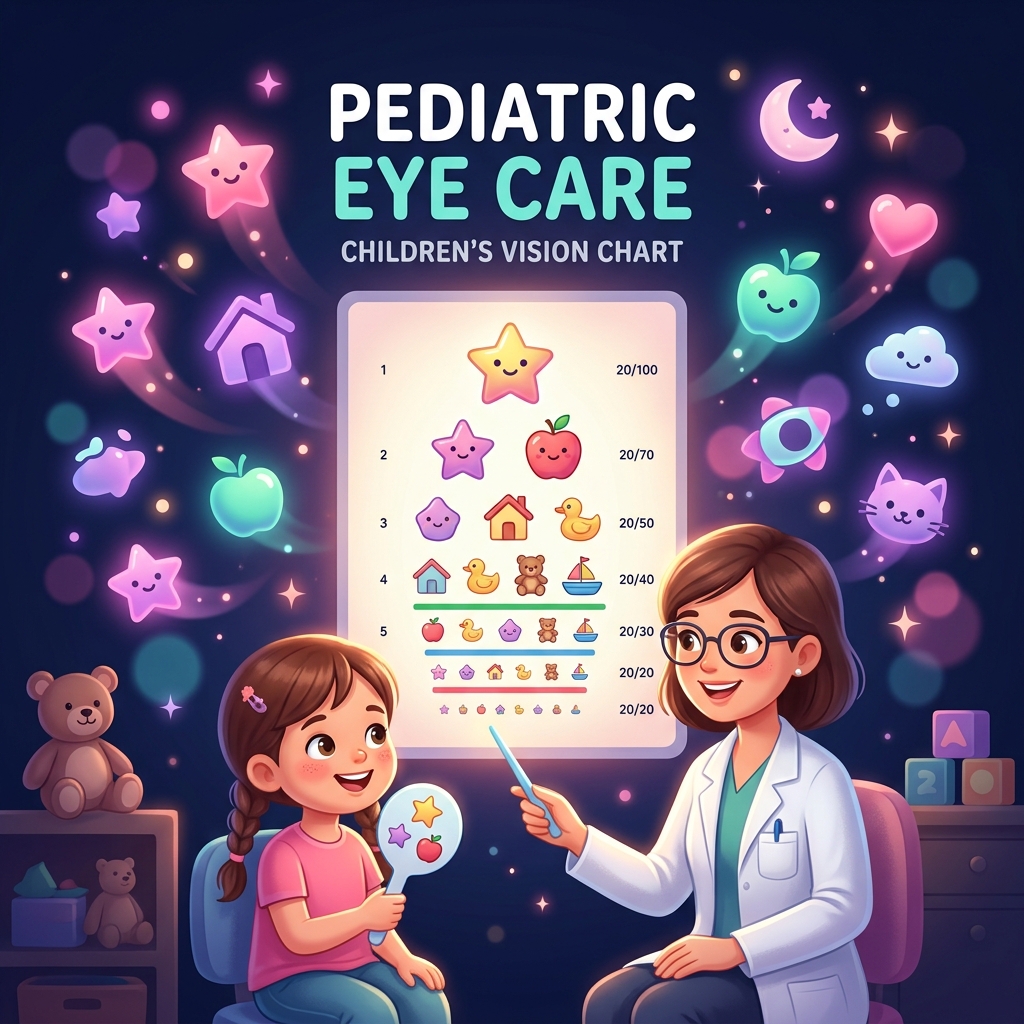
We use objective and child-friendly diagnostic tools that do not require children to read letters or sit perfectly still for long periods:
We verify basic visual development: tracking moving objects, pupil responses, and general eye alignment to rule out congenital abnormalities.
A crucial screen for strabismus (squint) and early amblyopia (lazy eye). Treating muscle imbalances at this stage yields the highest success rates.
We check visual acuity, depth perception, and color vision. Up to 80% of school learning is visual, so identifying glass requirements now prevents learning delays.
As children grow, their eyes lengthen rapidly. Near-sightedness (myopia) frequently develops between ages 8 and 14, requiring annual updates to prescription lenses.